Making
England, Italy, and Spain
What changes between Northampton, Italy, and Mallorca: the last, the sole, and the way the upper is closed.
Three places, one wardrobe
This index splits classical shoes by where they are made: Northampton for England, a handful of Italian cities for Italy, and mostly Mallorca for Spain. The split is useful because the last, the sole, and the way the upper is closed still differ by place, even when the catalogue photograph looks alike.
A buyer who only knows one country will often blame fit on size. Size is one number. The wooden last under that number is another. A 42 from Florence and a 42 from Northampton are not the same foot-shaped object. Country is a short way of saying which family of lasts and constructions you are about to try.
None of the three is “better.” England tends toward a lasting welt and a repairable sole. Italy often tends toward a lighter shoe and a sharper or more personal last. Spain, on the island factories in this list, often borrows the English welt and then cuts its own lasts at a wider range of prices. The rest of this essay is how to tell those differences in the hand.
Northampton
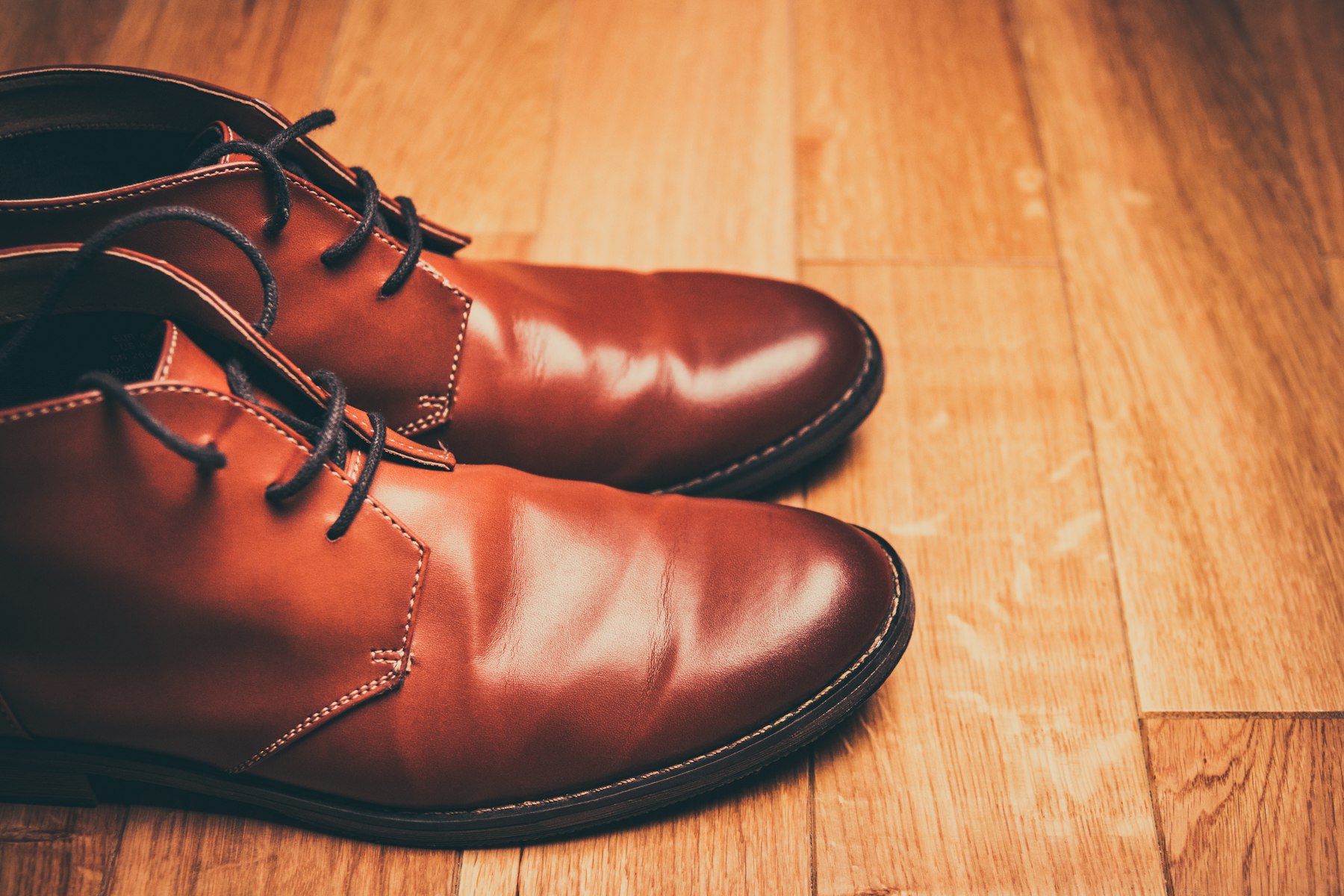
The English shoes in this index are Northampton shoes. The town and the villages around it still hold the factories that define the English dress shoe for most buyers. The usual construction is a Goodyear welt: a strip of leather is stitched to the upper, and the sole is stitched to that strip. The sole can be replaced without rebuilding the upper.
The lasts still differ inside that one town. Crockett & Jones is the rounded English toe. Edward Green is slimmer. Tricker's is the heavier country shoe. A fiddle waist, the shaped waist under the arch, is a finish on the better pairs. It is not a separate style of shoe.
A double leather sole and a storm welt belong with wet weather and country cloth. A single sole and a close edge belong with a town suit. The town and the factory sit a short walk apart; the catalogue usually says which sole you are looking at.
English factories also publish last codes more often than Italian workshops do. If you already know that a 337 or an 888 fits you at one house, you can often read that code across other Northampton makers who share a similar block. Codes are not universal, but they are a better starting point than guessing from a photograph of the toe.
Break-in is part of the English shoe. A new Goodyear welt can feel stiff for a week. That stiffness is the welt and the sole settling, not a sign that the last is wrong—unless the heel slips or the little toe is crushed from the first hour. Pain at a bone is a wrong last. Mild resistance through the flex is ordinary.
What the welt is doing
In a Goodyear-welted shoe the upper is lasted onto an insole, a rib of material stands up from that insole, and a welt strip is sewn through the upper into that rib. The outsole is then sewn to the welt. When the outsole wears through, a cobbler can cut the sole stitches, lift the old sole, and sew a new one to the same welt.
That repair cycle is why Northampton shoes are bought as long-term objects. It is also why they feel heavier than a light city shoe: there are more layers between your foot and the pavement. If you want that repair path, ask for a welt. If you want the lightest possible dress shoe, a welt may be more structure than you need.
A storm welt adds a second lip of leather along the join, meant to keep water out of the seam. It belongs with country shoes and winter pavements. On a black office oxford it is usually unnecessary weight.
Italy
Italy is not one last. Florence, Bologna, the Marche, and Naples each cut differently. Stefano Bemer is often a chisel toe. Sutor Mantellassi is the lighter Florentine sole. Enzo Bonafè is the Bologna house with a hand-welted reputation. Paolo Scafora works close to a bespoke pattern.
Many lighter Italian shoes are Blake-stitched. The upper is sewn directly to the insole, from the inside. The shoe is flexible, and the sole is not rebuilt the way a welted sole is. A Blake stitch is a different weight of shoe, not a fault. Ask which one you are holding.
Hand-welted work from Bologna and Naples sits closer to English repair habits than a light Blake city shoe. The same country can sell both. Read the construction line, not only the city on the label.
Italian lasts often run longer in the toe or narrower through the waist than a round English last. A man who wears a comfortable Northampton oxford can find an Italian chisel tight across the ball of the foot even when the stamped size matches. Try before you commit, or order only a last you have already worn from that house.
The Italian shoe also shows itself in finishing: a closer edge, a more open grain on the leather, a thinner sole that bends earlier in the step. Those are manners, not defects. Pair them with cloth that can take a lighter shoe—worsted, linen, a soft jacket—rather than expecting the same stance as a double-soled country derby.
Mallorca
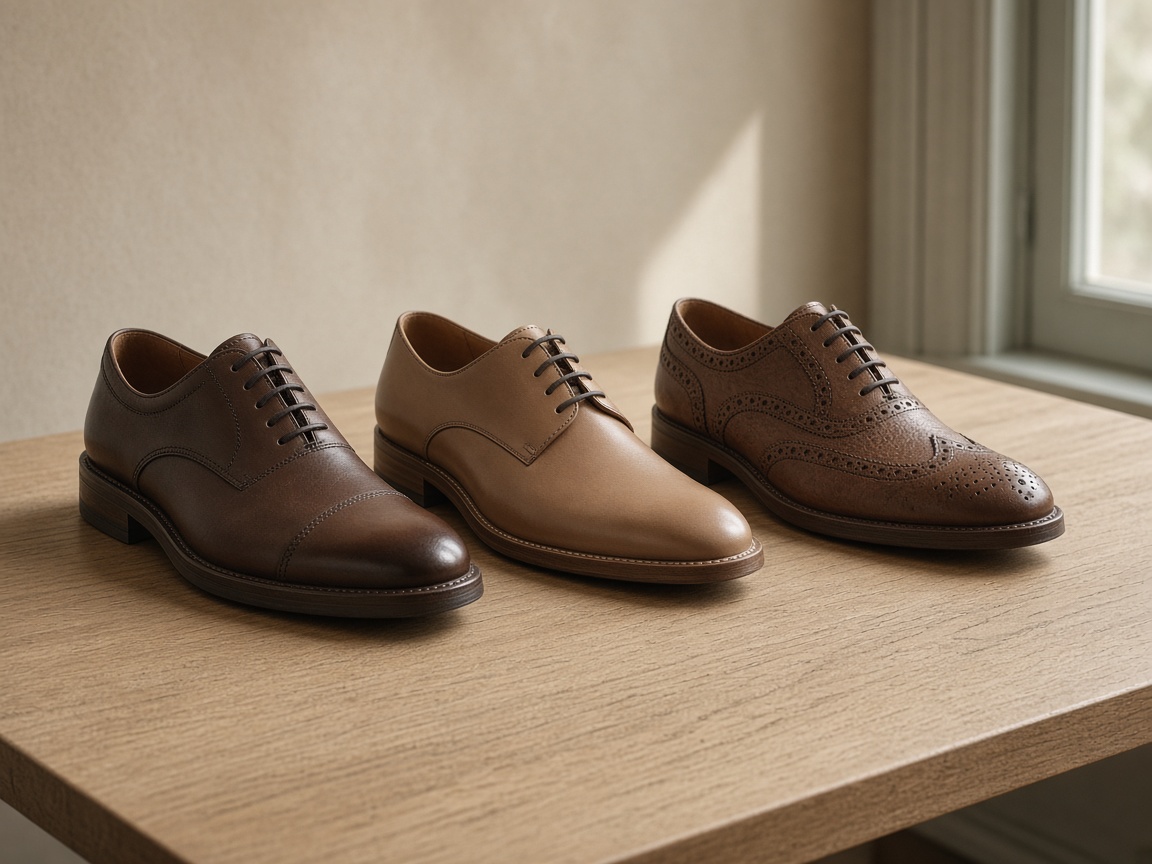
The Spanish makers here are mostly Mallorcan, and many of them use the English welt. Meermin is the Goodyear-welted shoe at a sharper price. Carmina works on both a Spanish last and an English-influenced one, so the toe can be the one you already know or a different one.
TLB Mallorca is often the narrower last. Yanko keeps a formal toe. Berwick uses the English brogue vocabulary. Spain is where the Northampton construction and a choice of lasts meet across a wider range of prices.
Factory finishing on the island can look close to an English edge. The last is still Spanish unless the maker says otherwise. Try both if you can: a Mallorcan last and a Northampton last of the same size rarely feel the same over the day.
Mallorca matters for buyers who want a welted shoe without paying for a Northampton name, or who prefer a Spanish last that sits between a round English toe and a sharp Italian one. It is not a substitute for either tradition; it is a third set of lasts that happens to speak English construction.
Lead times and made-to-order programmes are common on the island. A stock pair ships like any factory shoe. A special last or a rare leather waits in a queue. Ask which of those you are buying before you treat the order like a high-street purchase.
Reading the shoe in the hand
Turn the shoe over. A welted sole shows a stitch line that follows the edge, set out from the upper. A Blake sole shows stitching closer in, often with a thinner look. If you cannot see the construction, ask the seller; the photograph of the toe will not tell you how the shoe can be repaired.
Press the waist. A fiddle waist on an English shoe is carved under the arch so the shoe looks narrower from the side. On a lighter Italian shoe the waist may already be thin without that carving. Neither tells you much about fit until the shoe is on the foot.
Flex the shoe gently at the ball. A new welted pair resists. A Blake pair yields sooner. Extreme softness in a supposed dress shoe can mean a thin sole that will not last under city pavement. Extreme rigidity that does not ease after a few wears can mean a last that does not match your foot.
Choosing
Try the last before you decide on the country. A rounded English toe and a chisel Italian toe are both correct, and they do not fit the same foot. A high instep is kinder in an open-laced derby than in a tight oxford. If you want the sole replaced years from now, ask for a welt, in Northampton or in Mallorca.
Weight is a second test. A Blake Italian shoe flexes sooner. A Goodyear welt needs a short break-in and then holds its shape. Neither is wrong; they ask for different socks and different pavements.
Buy one well-fitting pair in the construction you intend to keep, then expand. A wardrobe of three ill-fitting lasts from three countries is worse than one honest Northampton oxford or one honest Italian Blake that you wear to the end of its sole.
The houses are listed the same way: English shoes, Italian shoes, and Spanish shoes. Start in the region whose manners match the cloth you already own, then cross the border once you know your foot on that first last.